Reviewing Show Me Your Kitties for Embroidery Projects
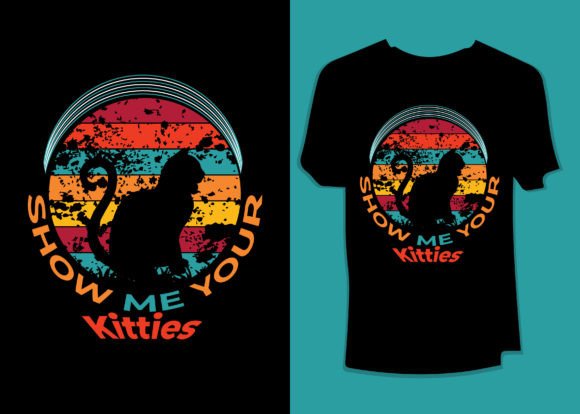
As a designer who has spent years translating digital art into thread, I have learned that not every cute graphic translates well to the needle. When I first opened the files for Show Me Your Kitties, my initial reaction was one of cautious optimism. The retro aesthetic is undeniably charming, tapping into that nostalgic wave that dominates current T-Shirt Designs. However, charm does not always equal stitchability. My job is to look past the screen and imagine how this design behaves under tension, on various fabrics, and in the hands of a customer who expects durability.
First Impressions and Visual Personality
The mood of Show Me Your Kitties is playful yet grounded in a vintage sensibility. It avoids the overly complex gradients that often plague modern Graphics, opting instead for bold shapes and clear lines. This is crucial for embroidery. When I evaluate a new machine embroidery design, I look for visual clarity. Does the subject matter read clearly from three feet away? In this case, yes. The silhouette of the cats is distinct, which suggests that even with the slight distortion inherent in stitching, the core message remains intact.
The layout feels balanced, avoiding extreme negative space that might cause fabric puckering or excessive jump stitches. For an embroidery project intended for commercial sale, this balance is vital. It signals professionalism. A messy layout can make a handmade product look amateurish, whereas a considered composition elevates the perceived value of the finished product.
Real-World Application: The Custom Tote Scenario
To truly test the viability of this design, I mentally placed it on a heavy canvas tote bag, a staple item for many Etsy sellers and craft business owners. Canvas is forgiving, but it has a coarse fabric texture. The bold lines of Show Me Your Kitties would hold up well here, bridging the gaps in the weave without getting lost. Imagine this as a personalized gift for a cat lover. The retro vibe pairs perfectly with natural cotton or linen, creating a boutique feel that justifies a higher price point.
I also considered its use on a crewneck sweatshirt. Fleece and French terry are thick, requiring careful attention to stitch density. If the original file is too dense, it will create a stiff, cardboard-like patch on the chest. Since the provided files include vector formats like EPS and SVG, along with DXF, there is flexibility. However, as an experienced reviewer, I must note that vector files are not direct embroidery files. You will need to digitize these or use a converter carefully. The description mentions "Print Ready" files, which implies high-resolution raster images suitable for printing, but for embroidery, you must ensure your digitizing software interprets the curves correctly to avoid jagged edges in the satin stitch borders.
Navigating Technical Challenges
While the design is strong, there are areas where caution is required. Small details are the enemy of longevity. If Show Me Your Kitties includes tiny whiskers or intricate facial features, these may break after repeated washing. I recommend simplifying these elements if you are digitizing from the provided SVG or EPS files. Use a running stitch for fine details rather than satin, as it lays flatter and is less prone to snagging.
Another critical consideration is the hoop size. Ensure the design fits comfortably within your standard hoops, typically 4x4 or 5x7 inches. Placing a design too close to the edge of the hoop can lead to distortion. Furthermore, when working on stretchy fabrics like jersey tees, a proper stabilizer is non-negotiable. Without cut-away stabilizer, the weight of the thread could pull the fabric out of shape, ruining the custom apparel look.
Dark fabrics present another challenge. If you are stitching this on a black hoodie, you cannot rely on the background color to define the shape. You must use contrasting thread colors effectively. The "Easy to color Change" feature mentioned in the file description is beneficial here, allowing you to test different palettes digitally before committing thread. Always run a test stitch on scrap fabric of the same type to check for registration issues.
Commercial Viability and Brand Consistency
For small shop product lines, consistency is key. Show Me Your Kitties offers a versatile asset that can be adapted across various items, from embroidered patches to baby embroidery on onesies. However, the scale must be adjusted. A design that works on a tote may be overwhelming on a baby cap. For smaller items, consider isolating just one cat from the group to maintain visual harmony.
The inclusion of PDF and PNG files suggests this asset is also useful for printable mockup creation. Before you stitch a single thread, create digital previews to gauge customer interest. This saves time and materials. For commercial embroidery projects, ensuring you have the right license is paramount. While the files are provided for use, always verify the terms for selling finished goods versus digital redistribution. Most designers allow the sale of physical items but prohibit reselling the digital file itself.
Practical Designer Notes for Success
- Test on Scrap Fabric: Never stitch directly on the final garment. Test tension and density on a similar material first.
- Check Thread Contrast: Ensure your thread colors stand out against the fabric, especially for holiday embroidery or dark garments.
- Review Stitch Density: If digitizing from the vector files, reduce density for lightweight fabrics to prevent puckering.
- Confirm Hoop Size: Measure the design dimensions against your machine’s maximum hoop capacity.
- Inspect Small Details: Simplify tiny elements that may not survive industrial washing or frequent wear.
- Use Proper Stabilizer: Match the stabilizer type to the fabric weight; cut-away for knits, tear-away for wovens.
- Verify Licensing: Confirm whether the license permits commercial use of finished products before listing them in your small shop product inventory.
In conclusion, Show Me Your Kitties is a promising addition to any designer’s library, provided it is handled with technical care. It bridges the gap between trendy aesthetics and practical application. By respecting the limitations of the medium and leveraging the flexibility of the provided file formats, you can create design assets that not only look good on screen but endure in the real world. Whether you are creating a tote bag design for a local market or a bespoke sweatshirt embroidery for a client, this design offers the versatility needed for modern creative entrepreneurs. Just remember, the magic lies not just in the image, but in the precision of your stitch.